

KERNELSTUDIO
← All work
Web App

PokéVault

A Pokémon card collection tracker built to replace a paid subscription app. It tracks graded slabs and raw cards across multiple collections, keeps their prices current, and shows what a collection is worth at a glance.

Built as a personal request — a one-off app made for one person's own use, so there's no public link. The screenshots below show what it does.

The Need

Why it exists

A serious Pokémon collection outgrows a notebook fast. Values move every week, and the paid tracker charged a monthly subscription while its prices still had to be double-checked against the market.

PokéVault was built as the replacement: one private vault where every card is verified, prices come straight from the marketplaces collectors actually use, and the worth of the whole collection is one glance away.
Features

What it does

Multiple collections

Graded slabs and raw cards across multiple collections and portfolios, all in one vault.

Live pricing

Raw card prices from TCGplayer and graded card prices from PriceCharting, kept current.

Card scanner

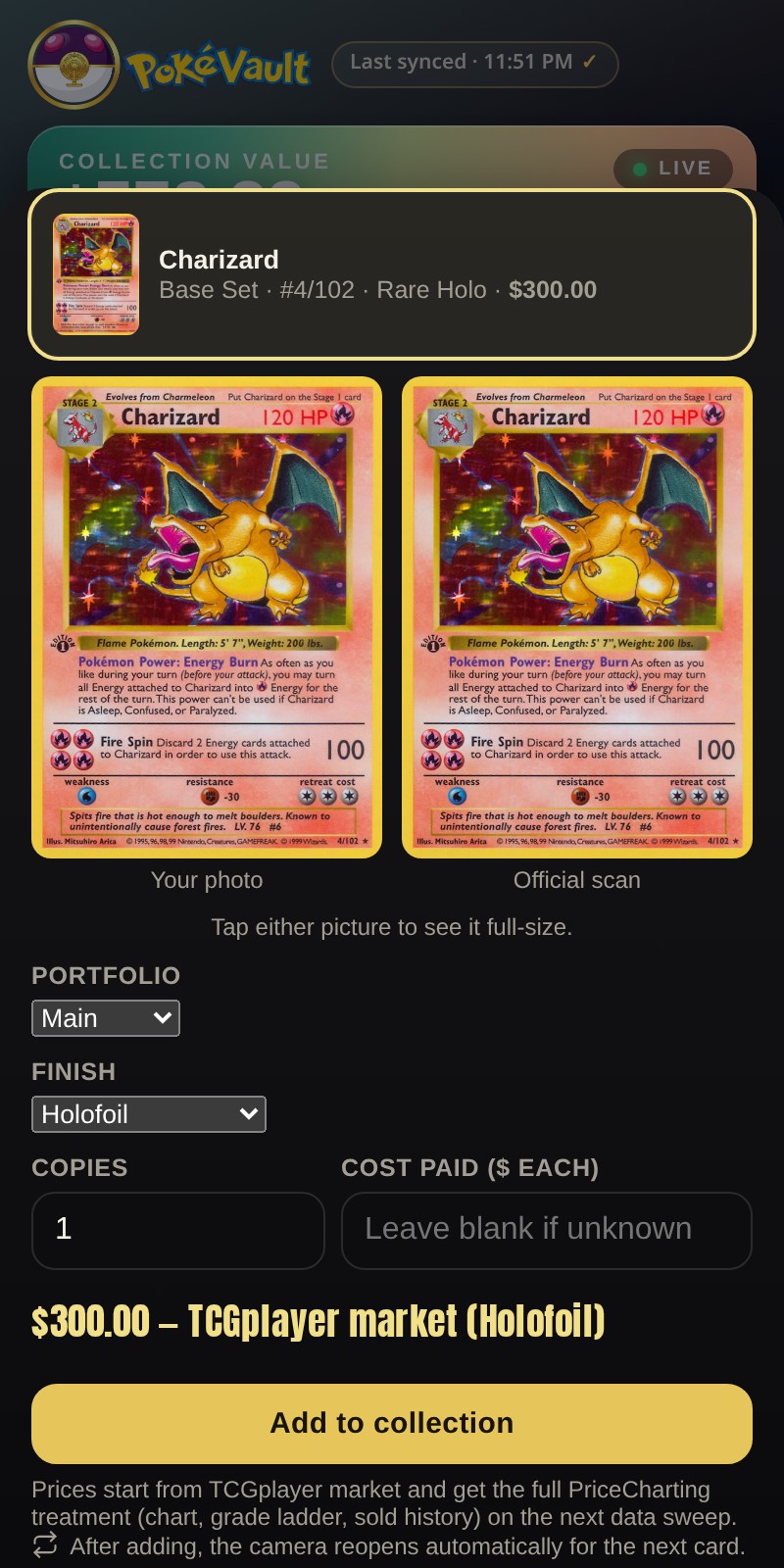
The scanner identifies a card from a photo and adds it to the vault.

Price charts & eBay sales

Every card carries a price chart and its recent eBay sales.

Biggest Movers

The cards in the vault gaining and losing the most value.

Grading Check

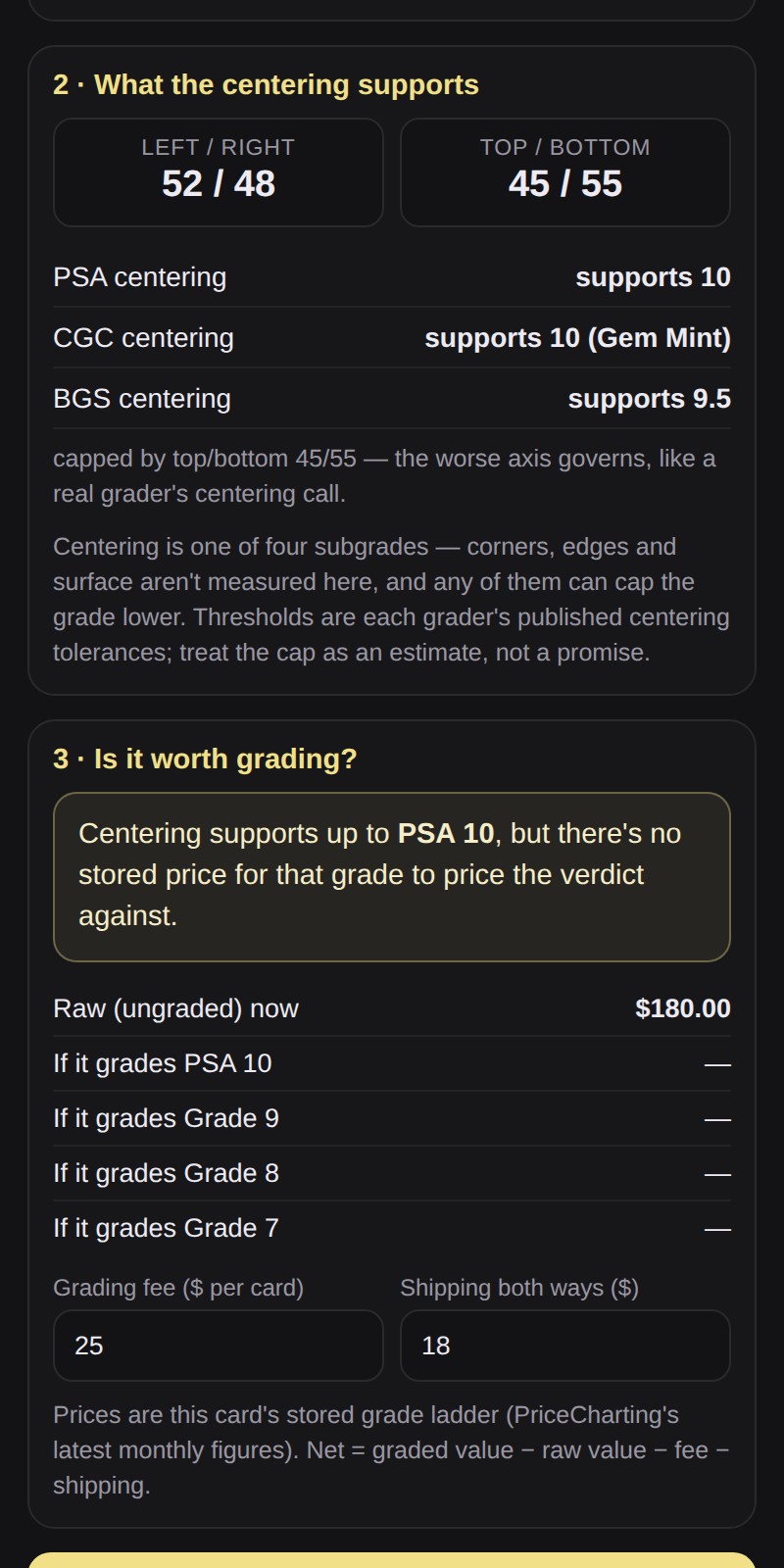
Helps answer whether a raw card is worth sending in for grading.

Sold log with undo

Sales are recorded in a log — and a sale marked by mistake can be undone.

Recently Added

A view of the newest additions to the vault.

Screenshots

Inside the app

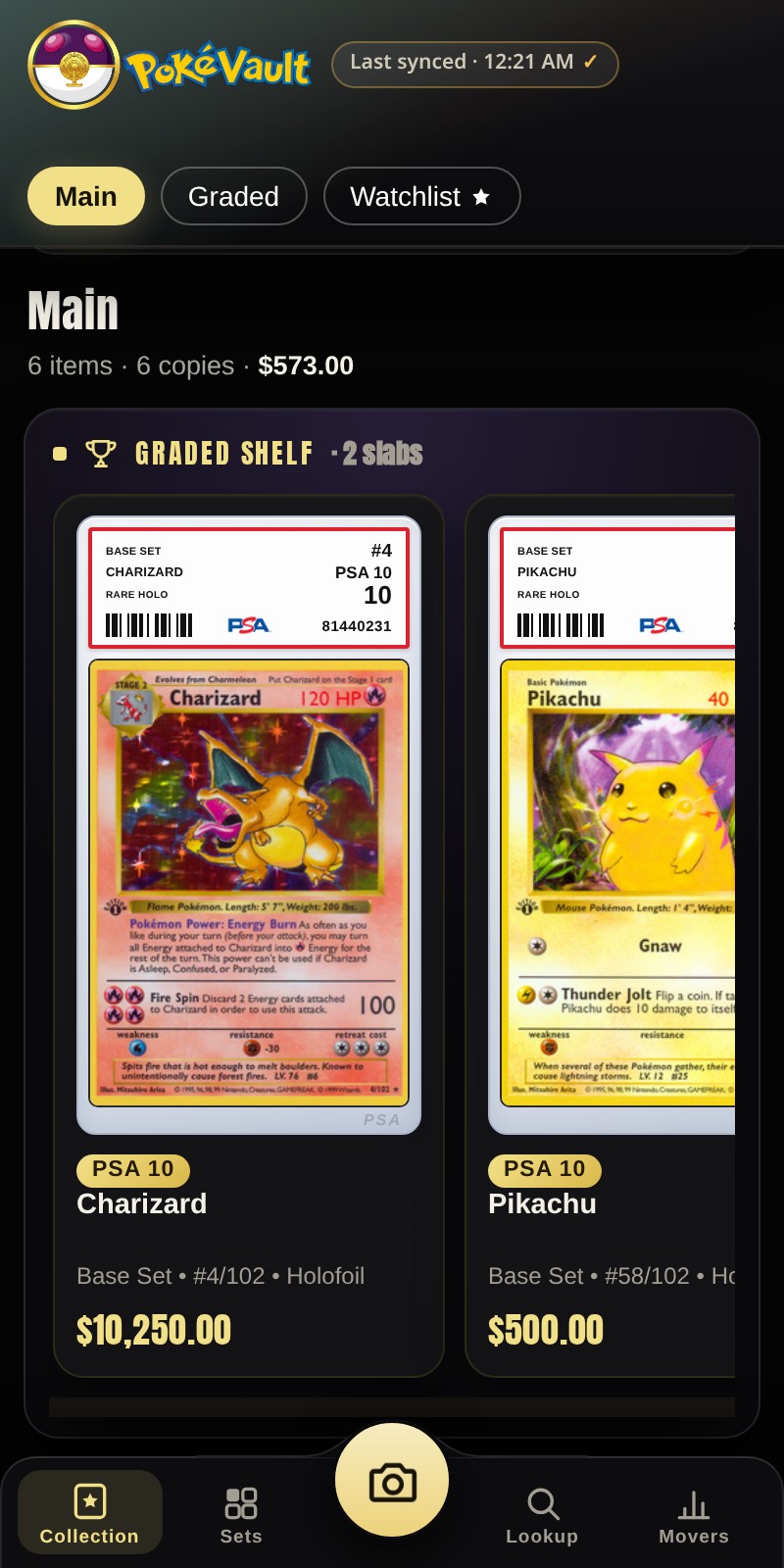
PokéVault demo vault — collection value, portfolios and the Graded Shelf with two PSA slabs
The vault at a glance — value, portfolios and the Graded Shelf. Demo collection shown.
PokéVault demo vault — the card grid with a price on every card
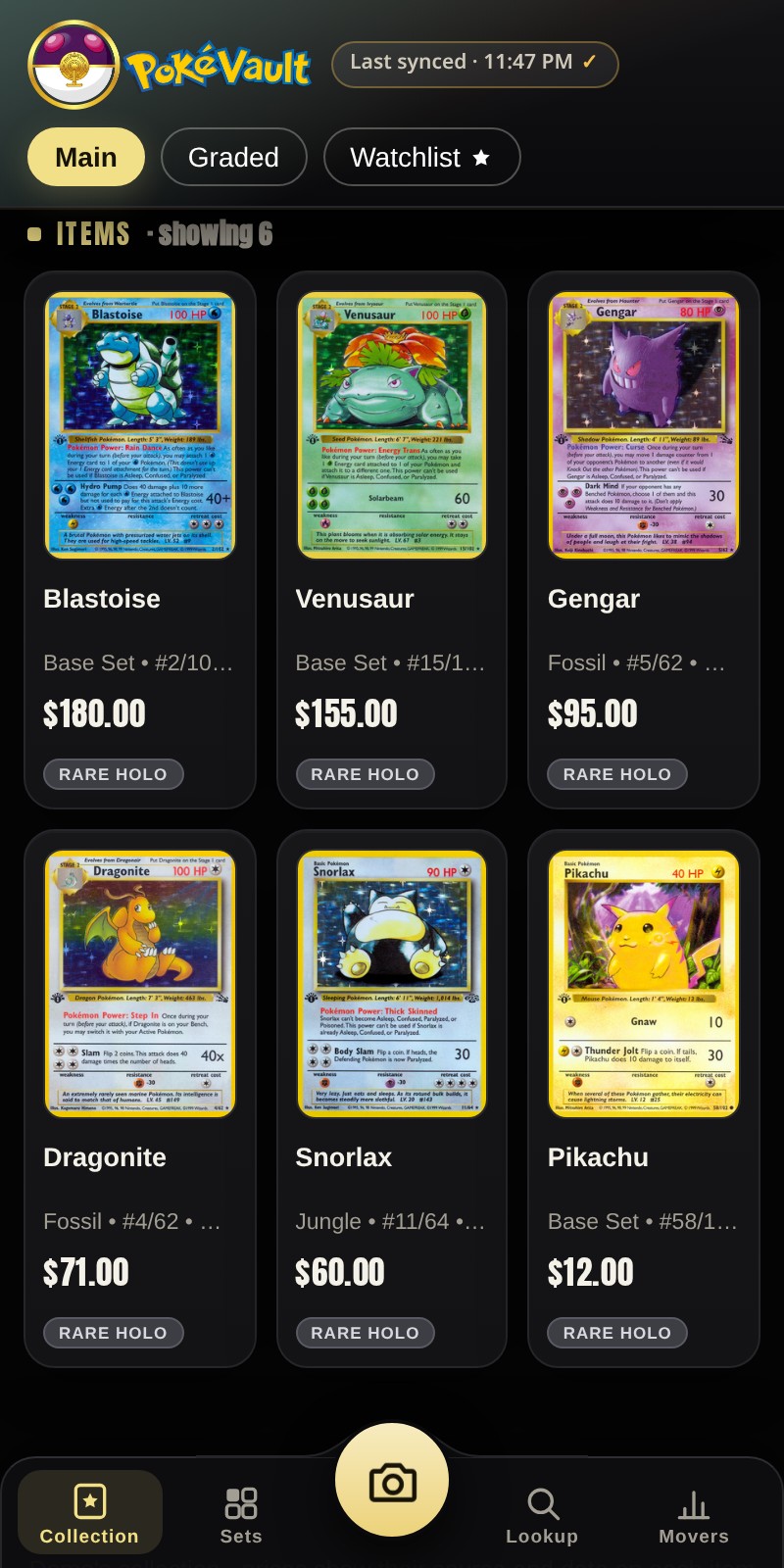
Every card in the grid carries its current price.
PokéVault demo vault — the Graded portfolio list with PSA grades and values
The Graded portfolio — slabs with their grades and values.
PokéVault demo — the scanner identifying a Base Set Charizard from a photo, with the official scan beside it for comparison
Scanner — identify a card from a photo.
PokéVault demo — Grading Check results for a raw Charizard: centering ratios, the grades they support, and the worth-it verdict priced against the card's grade ladder
Grading Check — is a raw card worth grading?

How It Was Built

How it came together

01

Start With the Real Thing

The build didn’t start from a template or sample data. The owner’s actual collection was imported first, and it became the specification: graded slabs, raw cards, sealed product and several portfolios all had to work from day one, because they were already there.

02

Price Slabs Like Slabs

A graded card doesn’t trade like a raw one, so PokéVault doesn’t price them alike. Raw cards follow TCGplayer; graded cards follow PriceCharting, the market where slabs actually sell. Two sources, each used for what it’s good at — never one blended number.

03

Never Lose a Card Quietly

An early version saved the whole collection in one pass, and a save that size could fail without any sign of it. That was rebuilt from the contract up: changes now sync one at a time and are confirmed, and a health check runs every day to prove the stored vault matches what’s on screen.

04

Labels Rendered Faithfully

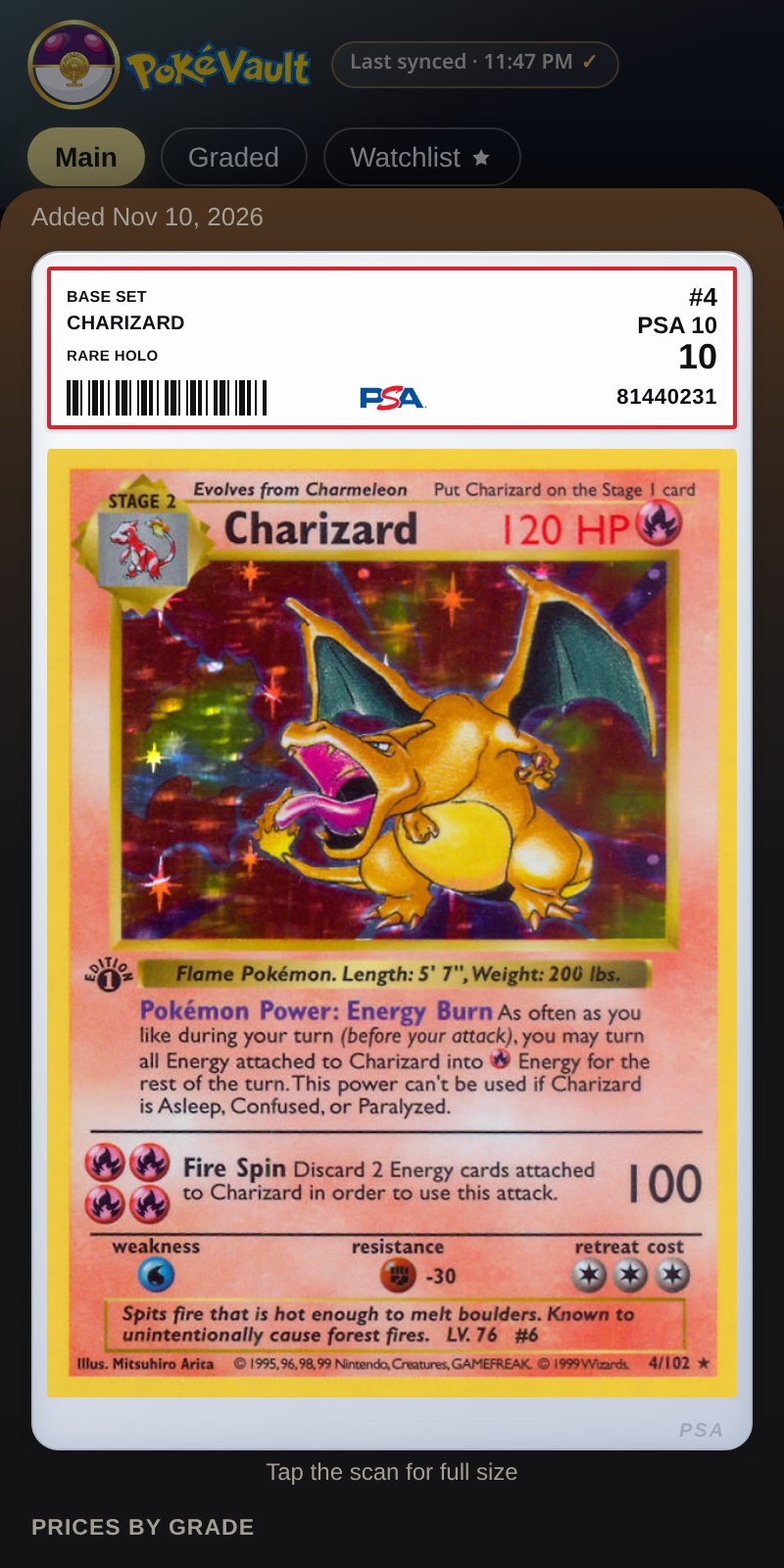
Open a graded card and the label is a replica of the real slab — the grading company’s layout and colors, the grade, the cert number in its place. The detail is small until you’re the collector: then it’s the difference between an app that stores cards and one that knows them.

Live Today

Still running, every day

12Recent eBay sales on every card
2Live price sources
3Collections tracked
0Subscription fees

The vault stays current on its own: prices refresh weekly, new cards are scanned in from a photo, and every sale lands in a log that can be undone. It is in daily use — and still growing.

Type
Web App
Status
Personal request — not public
Next project Dynasty League HQ →